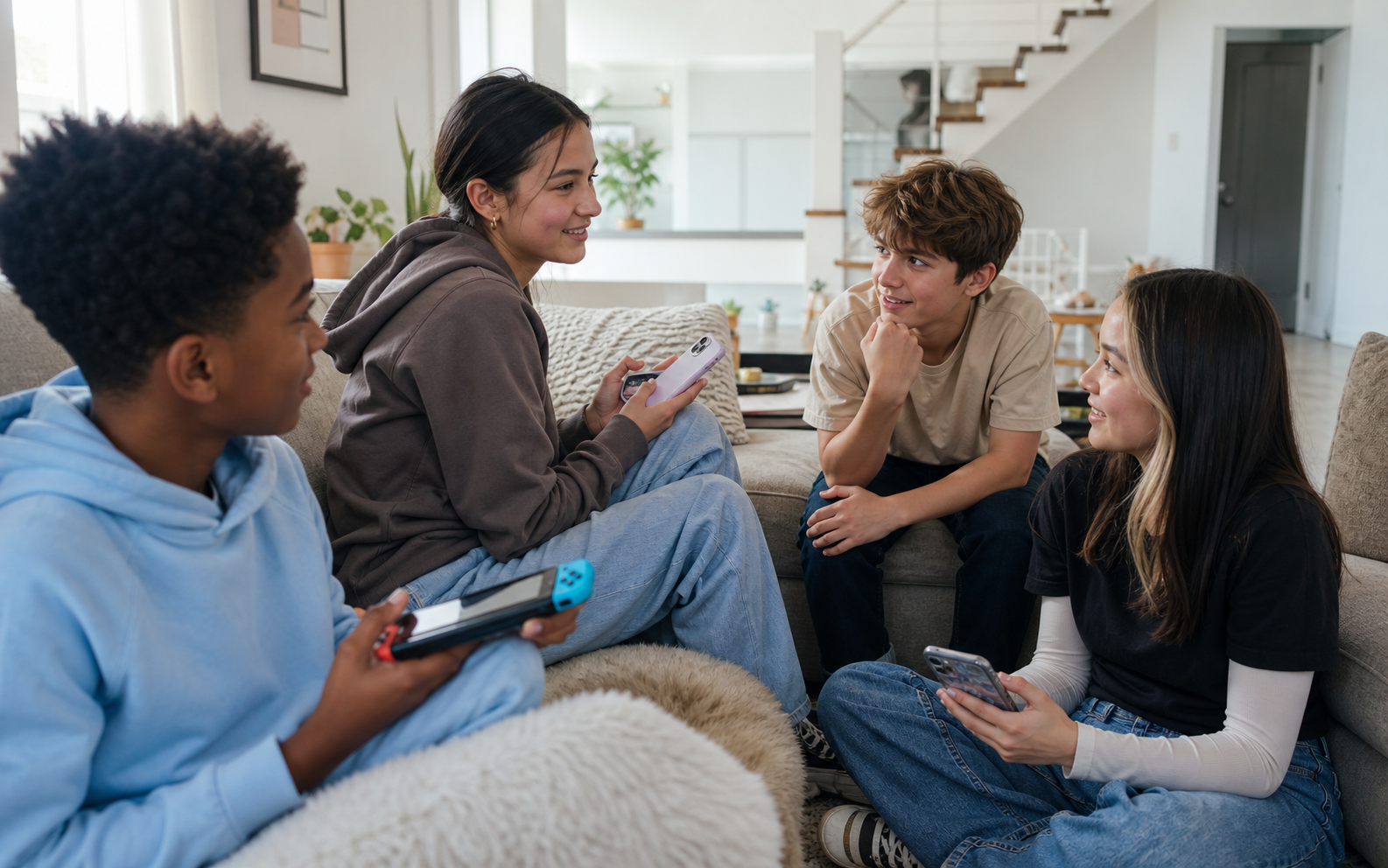
Gaming matters here as a recurring place to maintain friendship, not simply as entertainment consumed alone. For many children, the same world can be a game, a studio, and an informal classroom — creation tools make participation part of play, not a separate mode. Repeated play and private messaging give a known friend group recurring places to coordinate and stay connected.
Explore full detailInside their everyday.
How play, media, routines, and learning shape childhood. Start with a finding. Follow it to the evidence.
Play & Belonging
Social play, identity, family participation, and safety.
The relationship is the stable layer; games, messages, video, and in-person time are interchangeable settings around it.
Explore full detailHigh-frequency gaming sits beside creator-led sports coverage, linking play with a broader stream of youth media.
Explore full detailEven when children choose the activity, adults often shape access, payment, permissions, and the practical limits around it.
Explore full detailRecent gains in organized sport and outdoor participation challenge the idea that digital play simply replaces physical activity.
Explore full detail
Media & Influence
Video, creators, culture, household influence, and discovery.
Young children's daily media mix and older Alpha platform use both place video among the cohort's regular media routes.
Explore full detailShort-form video is growing among young children and appears as a frequent routine among adjacent teen audiences.
Explore full detailSports organizations use young creators to translate established culture into formats younger audiences already follow.
Explore full detailChildren can initiate and shape a decision while adults retain payment, permission, or final approval.
Explore full detailA recognizable challenge, sound, character, or ritual can travel farther than a one-off channel placement.
Explore full detail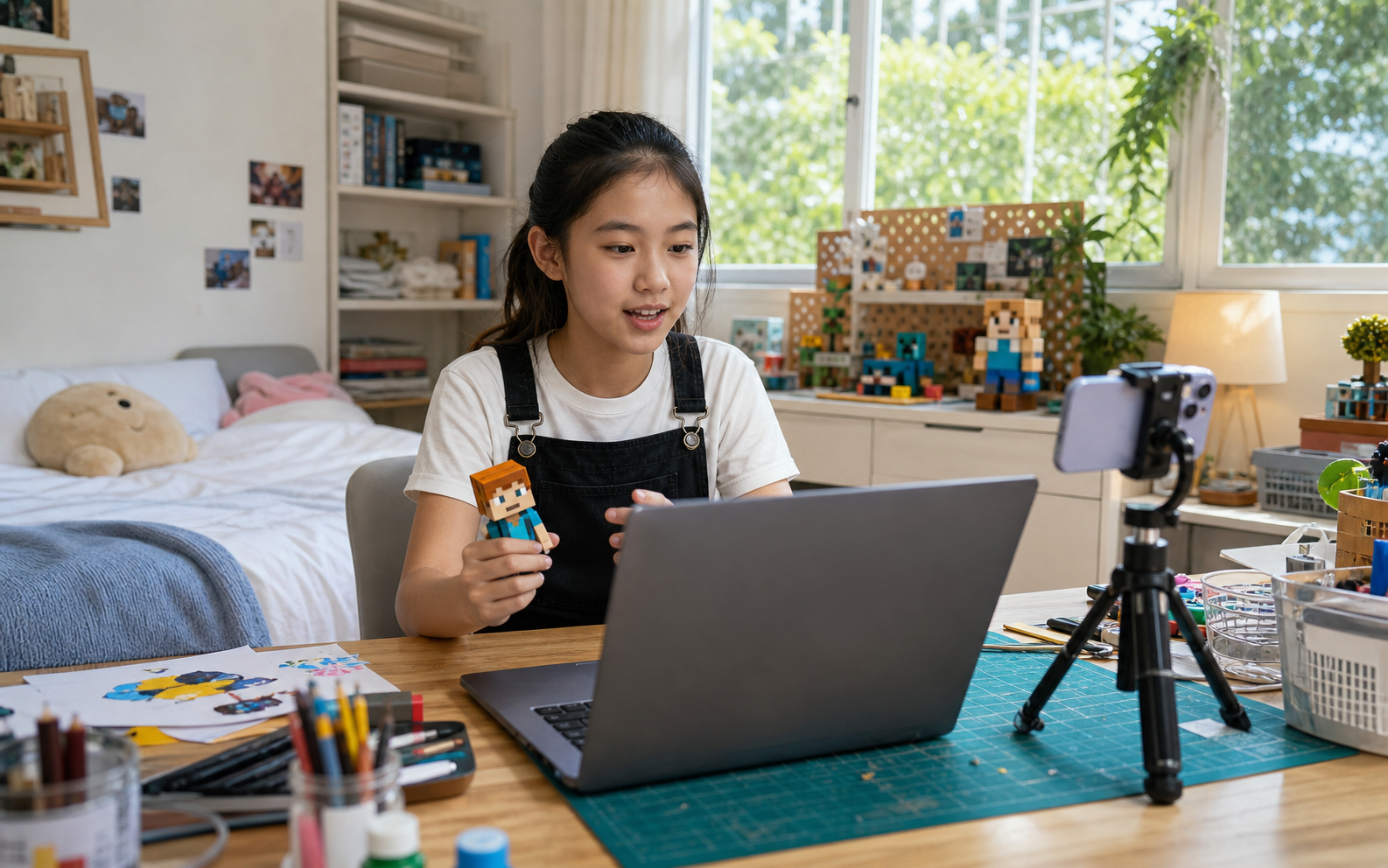
Time & Routines
Daily media rhythms, device access, and household context.
A single duration number collapses very different activities: talking, making, gaming, learning, and passive viewing.
Explore full detailYoung-child media data and teen platform data both place YouTube-related video inside a recurring daily media rhythm.
Explore full detailParenting the media day involves content, privacy, timing, permissions, and conversation, not only a timer.
Explore full detailAverages across the full generation hide steep changes in device ownership, autonomy, platforms, and social context.
Explore full detailScreen use needs contextual interpretation, while many Alpha respondents still place a premium on physical-only experience.
Explore full detail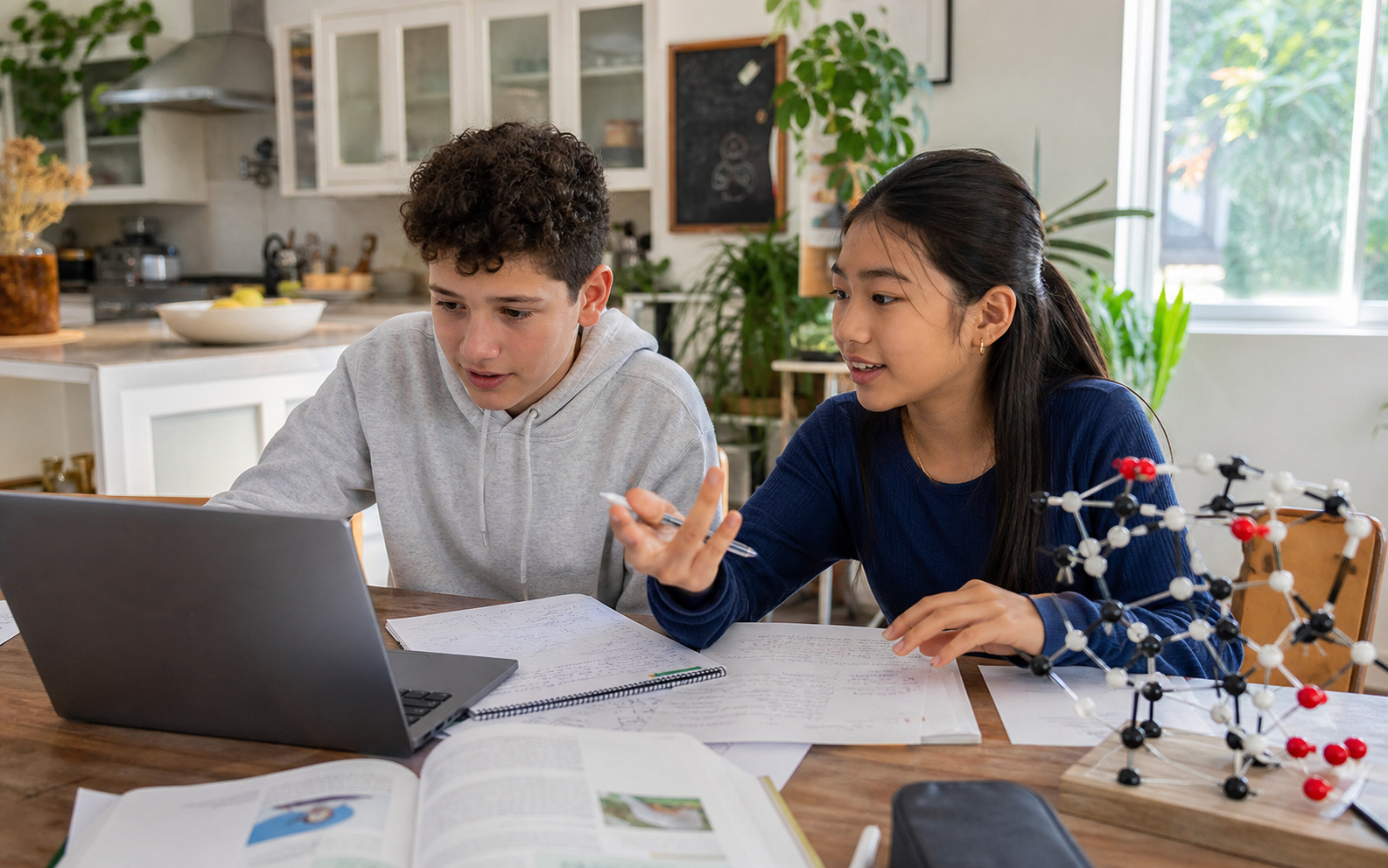
Learning & Becoming
Learning, creativity, AI, literacy, and self-directed growth.
A child may combine school, video, a game, search, and another person to answer one learning need.
Explore full detailChildren describe creative and problem-solving skills in creation games, while walkthrough viewing supplies tips and strategies for game progress.
Explore full detailAI has already joined the practical toolkit children use for explanations, homework support, and school tasks.
Explore full detailKnowing when and how to check an answer is becoming as important as knowing how to ask for one.
Explore full detailChildren report active building in games, while some young viewers also report making their own interest-based content.
Explore full detailMore in this theme
- AI use extends beyond schoolwork into discovery, creativity, and support.
- Safety guidance is lagging behind AI adoption.
- Technology matters for what it enables, not for the hardware itself.
- Commercial fluency begins as a form of practical learning.
- Children move among multiple interaction and learning modes.