Bluey
An Australian preschool animated series about a Blue Heeler puppy whose short stories turn imaginative play, feelings, and family negotiation into shared household language.
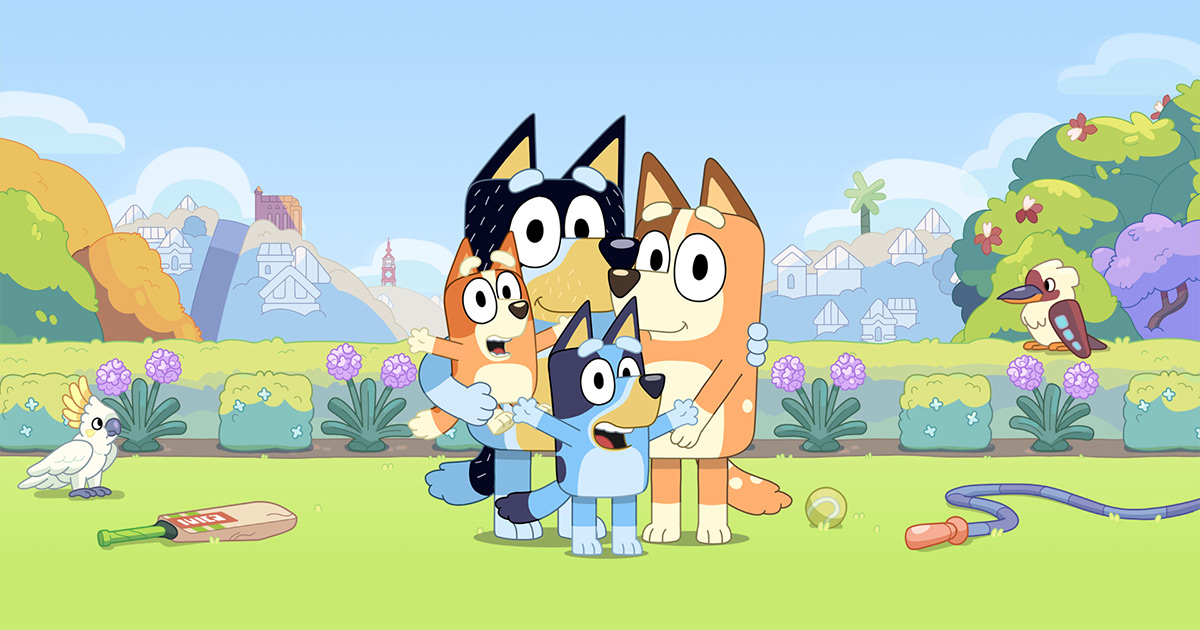
Who they are
Brisbane, Australia / Ludo Studio / ABC
An Australian preschool animated series about a Blue Heeler puppy whose short stories turn imaginative play, feelings, and family negotiation into shared household language.
Read on WikipediaWho they reach
Preschool and early primary families who co-view together, plus older siblings, educators, and adults who repeat episode games at home.
What they make
Seven-minute animated episodes, catchphrases and play scripts, books, toys, albums, games, and the live stage show Bluey's Big Play.
Platforms
- Disney+
- YouTube
- ABC iview
Known for
Keepy Uppy and other episode games moving directly into home play
The Sign turning a family change story into a household conversation
Books, toys, albums, games, and Bluey's Big Play extending the screen world offline
What they shape
Preschool television and family life
Everyday touchpoints
Disney+, YouTube, ABC iview, retail shelves, and live family theatre
Why she matters
Episodes model games, phrases, and emotional scripts that move directly from co-viewing into family play.
Disney+ · YouTube · ABC iview
Follow the connections
- Households set the conditions around play.
- Media influence is negotiated at household scale.
- Entertainment reaches them through multiple routes.
Related spaces
Related profiles
How to read this profile
Common Sense documents young children's video and household context, supporting Bluey's co-viewing lens without claiming title-level ratings. Common Sense Media
Ofcom's qualitative family-media evidence supports the movement between screen stories and daily routines. Ofcom